
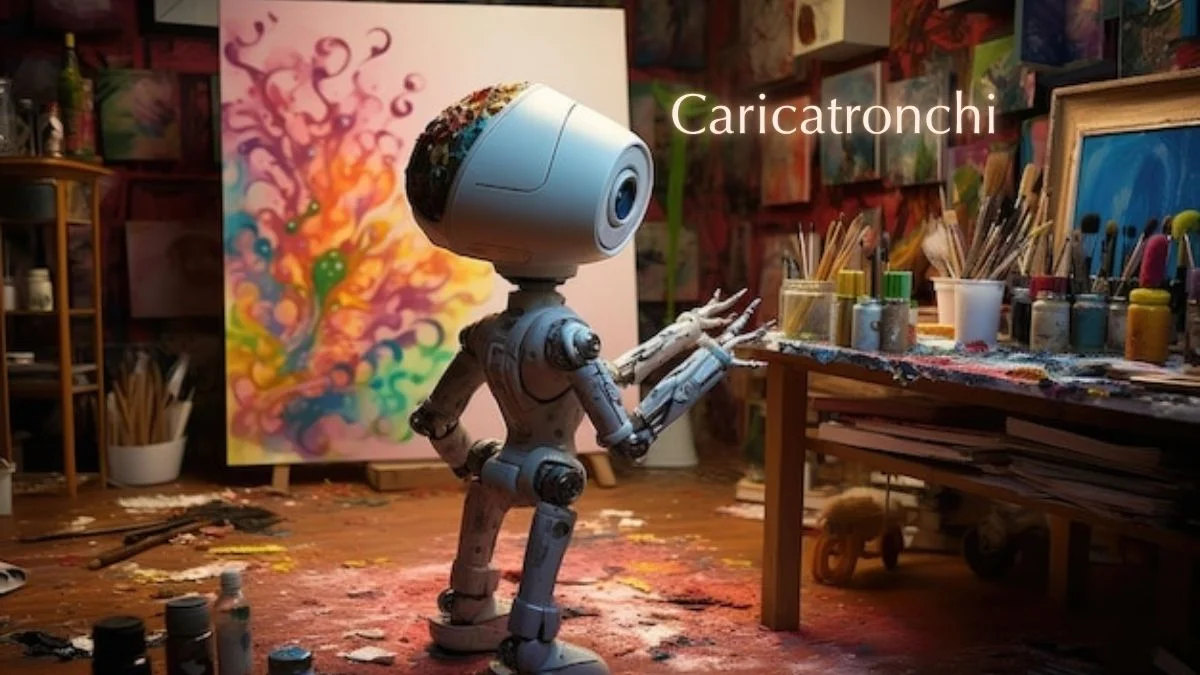
Imagine a world where a robotic arm sketches your portrait in real time, an AI algorithm decides the exaggeration level of each feature, and the resulting image is both a technical masterpiece and a deeply human expression. That world is no longer purely speculative — and it is increasingly described by one evocative term: caricatronchi.
This article offers a comprehensive exploration of the caricatronchi concept: its conceptual origins, its likely technological architecture, how communities are forming around it, and what it could mean for the future of digital creative expression. Whether you are an artist, technologist, or curious observer, this guide is designed to give you genuine information gain on a topic still taking shape.
1. Origins of Caricatronchi: Where the Name Comes From
The term caricatronchi appears to fuse two distinct conceptual lineages. The first is caricature — a centuries-old art form rooted in exaggeration, satire, and the distillation of a subject’s defining visual traits into a memorable, often humorous likeness. The second is a nod to the mechanical and robotic (the suffix “tronchi” echoing electronic or tronics in spirit), suggesting a fusion of analog artistic tradition with modern machine intelligence.
From a conceptual perspective, caricatronchi likely emerged in the overlap between generative AI art communities and robotics enthusiasts who began experimenting with automated portrait-drawing rigs around the early 2020s. It could be understood as a philosophical statement as much as a technical one: the belief that machines, when properly directed, can embody and even extend the creative intent of a human caricaturist.
The word itself carries a playful energy — it is the kind of term that tends to emerge organically in maker communities, Discord servers, and creative technology forums before it gains any formal definition. That grassroots quality is likely part of its appeal.
2. What Is Caricatronchi? A Working Definition
At its broadest, caricatronchi refers to the practice, technology, and aesthetic philosophy of producing caricature-style artwork through robotic and/or AI-driven systems. It encompasses:
- Automated drawing machines (pen plotters, robotic arms, gantry systems) that physically render caricature-style portraits.
- Generative AI models fine-tuned or prompted to produce exaggerated, stylized likenesses of subjects.
- Hybrid human–machine workflows where an artist’s stylistic intent is encoded into a model or mechanical system.
- Interactive installations where visitors receive a caricatronchi portrait in real time, generated and rendered by a machine.
Research into adjacent fields — computational creativity, style transfer, affective computing — indicates that systems capable of producing caricatronchi-style output are increasingly viable. The convergence of accessible robotics hardware (e.g., AxiDraw pen plotters, robotic arm kits) and powerful vision-language models has likely made caricatronchi more achievable for independent creators than ever before.
3. The Technology Behind Caricatronchi
3.1 AI and Computer Vision Components
A functioning caricatronchi system would likely rely on several AI subsystems working in concert. Face detection and landmark recognition pipelines (such as those built on MediaPipe or similar frameworks) would first identify key facial features. From there, a style-transfer or diffusion model — potentially fine-tuned on a dataset of classic caricatures — would apply the characteristic exaggeration logic.
Research indicates that models like Stable Diffusion, ControlNet, and custom LoRA adapters can be guided to produce outputs that closely match the aesthetic conventions of caricature art: enlarged eyes, elongated noses, exaggerated jawlines, and so on. The “intelligence” of a caricatronchi system likely lies in how well it balances recognizability with expressive distortion.
3.2 Robotics and Physical Rendering
On the physical side, caricatronchi systems typically involve a drawing actuator — most commonly a pen plotter or a multi-axis robotic arm — that translates a digital SVG or vector path into marks on paper, canvas, or another substrate. The challenge, from a robotics standpoint, is converting the smooth, gestural quality of caricature line work into precise motor commands.
Techniques from computational geometry — curve smoothing, stroke simulation, and path optimization — are likely employed to ensure that the rendered lines retain the fluid quality associated with skilled human draughtspeople. The result could be a physical artifact that looks handmade despite its mechanical origin.
3.3 Key Technologies at a Glance
| Technology | Role in Caricatronchi | Maturity Level |
| Facial Landmark Detection | Identifies key features for exaggeration targeting | High |
| Diffusion / GAN Models | Generates stylized, exaggerated likeness | High |
| ControlNet / LoRA Fine-tuning | Guides output toward caricature aesthetic | Moderate–High |
| Pen Plotter / Robotic Arm | Physically renders the final artwork | Moderate |
| SVG Path Optimization | Ensures fluid, natural-looking line strokes | Moderate |
| Affective Computing | Potentially guides emotional expressiveness | Emerging |
4. The Caricatronchi 7-Step Method: A Unique Framework
For practitioners looking to build or deploy a caricatronchi system, the following framework — developed from the convergence of robotics engineering, generative AI practice, and traditional caricature theory — offers a structured approach:
- Subject Capture — Photograph or scan the subject under controlled, even lighting. Multiple angles likely improve output quality.
- Facial Analysis — Run the image through a landmark detection pipeline to map key feature coordinates (eye spacing, nose bridge length, chin projection, etc.).
- Exaggeration Scoring — Apply a parameterized exaggeration function. Each feature receives a distortion weight based on the desired style intensity (subtle, moderate, or comedic).
- Style Encoding — Pass the exaggerated feature map through a caricature-trained diffusion model or style-transfer network to generate the visual output.
- Vector Conversion — Convert the raster output to clean vector paths using tools such as Vectorizer.AI or Inkscape’s autotrace with post-processing.
- Path Optimization — Apply stroke-smoothing and speed-profiling algorithms to prepare the paths for the drawing machine.
- Physical Rendering — Execute the optimized paths on the robotic drawing system. Post-processing (inking, watercolor wash, digital enhancement) may follow.
This 7-step method is conceptual and intended as a starting scaffold. Practitioners would likely need to adapt each stage to their specific hardware and software stack. Outcomes will vary based on model training quality, hardware precision, and the stylistic intentions of the operator.
5. The Caricatronchi Community: Collaboration and Creative Exchange
One of the most compelling aspects of caricatronchi as a phenomenon is the community that appears to be forming around it. Like many maker and creative technology movements, it likely thrives in the liminal spaces between formal disciplines — attracting robotics engineers curious about art, illustrators intrigued by automation, and AI researchers drawn to the challenge of encoding aesthetic judgment.
Communities of this kind tend to organize around shared repositories (GitHub and Hugging Face being common hubs), social platforms oriented toward visual output (Instagram, Bluesky, Are.na), and in-person events such as maker faires, hackathons, and digital art exhibitions. Participants share model weights, pen plotter configurations, and caricature datasets, iterating collaboratively on the craft.
If you are considering joining this space, likely entry points include contributing to open-source pen plotter projects, sharing fine-tuned caricature models, or organizing community portrait sessions — events where the machine draws visitors live, creating both an artifact and a conversation about the nature of machine creativity.
6. Artistic and Cultural Implications
6.1 Authorship and Creativity
Caricatronchi raises genuinely fascinating questions about artistic authorship. When a machine produces a caricature, who is the artist — the original human caricaturists whose work trained the model, the engineer who built the system, or the operator who directed a particular session? These questions are not merely philosophical; they have potential implications for intellectual property law, creative attribution, and the economics of illustration.
From a cultural perspective, caricatronchi could be understood as a continuation of a long tradition of tool-assisted art — from the camera lucida used by old masters to trace projected images, to digital illustration tablets, to generative AI. Each generation of tools has provoked similar anxieties and similar liberations.
6.2 Accessibility and Democratization
Perhaps the most optimistic reading of caricatronchi is its potential to democratize a specialized skill. Traditional caricature demands years of practice, a strong grasp of facial anatomy, and the ability to see and exaggerate meaningfully. Caricatronchi systems could potentially allow anyone — with access to the right software and a modest hardware setup — to produce high-quality caricature art, lowering the barrier to entry for a form of expression previously gated by natural talent and long practice.
7. Potential Applications of Caricatronchi
The practical applications of caricatronchi are likely broader than they might initially appear:
- Event entertainment — Live portrait machines at weddings, corporate events, and festivals, producing personalized caricature keepsakes in minutes.
- Retail and brand activations — Interactive kiosks where customers receive branded caricature portraits as marketing collateral.
- Therapeutic and educational settings — Art therapy environments where the machine acts as a collaborative tool, reducing the anxiety that a human artist’s presence might create.
- Museum and gallery installations — Caricatronchi as interactive fine art, inviting visitors to become subjects and co-creators.
- Social media content generation — Automated pipelines producing caricature-style content for influencers, politicians, or public figures (within appropriate ethical and legal frameworks).
- Historical and archival projects — Animating or reinterpreting historical caricature traditions through machine learning.
8. Challenges and Ethical Considerations
It would be incomplete to discuss caricatronchi without acknowledging the challenges it presents. From a technical standpoint, achieving the balance between recognizability and exaggeration remains non-trivial; models that over-exaggerate risk producing outputs that feel mocking or distorted rather than witty and insightful.
Ethically, the use of AI to produce caricatures of real individuals — particularly public figures — raises concerns about consent, defamation, and the potential for outputs to be weaponized in political or social contexts. Any community or platform built around caricatronchi would likely need robust guidelines addressing these risks.
There are also equity dimensions to consider. If the training data for caricatronchi models skews toward particular cultural traditions of caricature, the outputs may reflect biases in how different ethnic groups or facial features are exaggerated — a concern that research in algorithmic fairness strongly suggests taking seriously.
9. The Future of Caricatronchi
Looking forward, the trajectory of caricatronchi is likely tied to the broader trajectories of generative AI, robotics miniaturization, and the evolving cultural status of machine-made art. Several developments could plausibly accelerate the field:
- More capable and affordable robotic drawing hardware entering the consumer market.
- Larger, more diverse caricature-specific training datasets enabling higher-fidelity and more culturally sensitive outputs.
- Real-time performance improvements allowing live caricature generation in under 60 seconds.
- Integration with AR/VR environments, enabling digital-native caricatronchi experiences.
- Formal recognition in the art world — gallery shows, residencies, and critical discourse centered on machine caricature as a legitimate medium.
Research in human-computer interaction and creative AI increasingly suggests that tools which augment rather than replace human creative judgment tend to achieve the most culturally resonant outcomes. Caricatronchi, at its best, likely functions as an amplifier of human wit and artistic vision — not a substitute for it.
10. Summary Checklist: Caricatronchi at a Glance
| Caricatronchi fuses caricature art traditions with AI and robotic drawing systems. |
| Core technologies include facial landmark detection, diffusion models, and pen plotters. |
| The 7-Step Caricatronchi Method provides a structured workflow from subject capture to physical rendering. |
| Community collaboration — via open-source tools, shared datasets, and events — is central to its development. |
| Applications range from event entertainment to therapeutic art tools and gallery installations. |
| Ethical considerations around consent, bias, and defamation require ongoing community attention. |
| The future likely involves faster rendering, AR/VR integration, and growing cultural legitimacy. |