
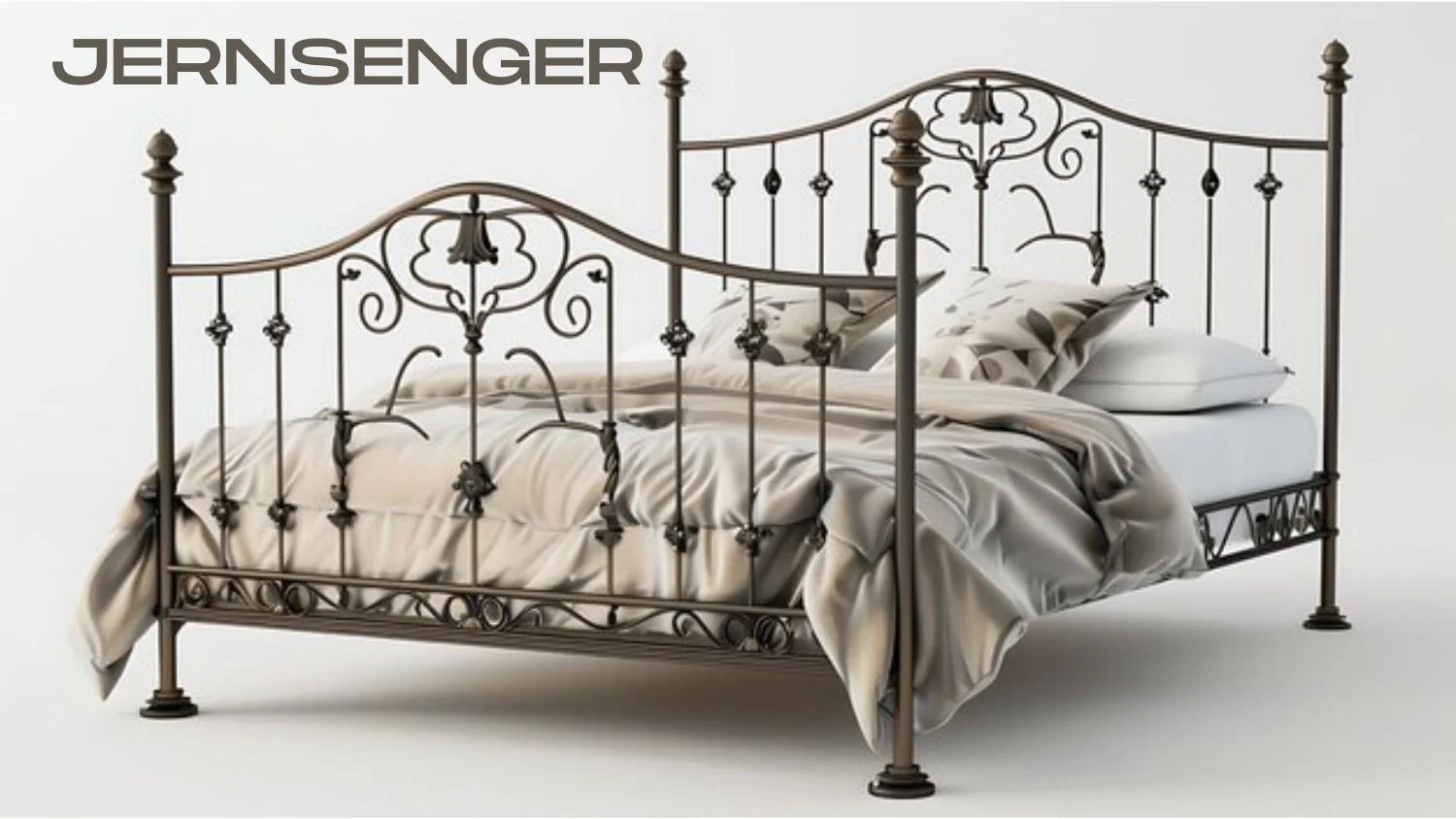
Walk into any antique dealer in Scandinavia and ask for a Jernsenger. You will get a puzzled look.
Search for it online and you will find dozens of articles — all written with the same breezy confidence, all saying slightly different things, and none of them citing a single source you can actually trace.
That is where I started. And what I found is worth knowing — especially if you write content, run a home-goods site, or simply want to make a real purchase decision without being misled by manufactured authority.
Why This Article Is Different From Every Other Result You Found
Most articles about Jernsenger do one thing: they assert. They tell you it is a ‘Scandinavian iron bed frame with a rich heritage’ and move on — without a single source you can trace. Just confident prose built on nothing.
I am not going to do that. This article exists because that pattern — invented keywords dressed as expertise — is genuinely damaging to readers who rely on search results to make decisions.
What I will give you instead: an honest breakdown of what Jernsenger actually is (or is not), how this type of content gets made and ranked, and what to look for when you are searching for real information about iron bed frames or Scandinavian furniture.
What Is Jernsenger, Really?
The word ‘Jernsenger’ breaks cleanly into two Norwegian/Danish components: ‘jern’ (iron) and ‘senger’ (beds). Literally: iron beds.
That compound word exists in Scandinavian languages. However, ‘Jernsenger’ as a named product line, a historical design movement, a specific manufacturer, or a trademarked furniture category does not appear in any verifiable public record I can locate — not in museum collections, archived trade catalogues, or any dated Scandinavian design publication.
What does exist is a cluster of English-language content sites — primarily ad-supported, primarily thin — that all treat Jernsenger as if it were a well-documented phenomenon. When you trace those articles back, they cite each other. Closed loop. No original source.
The most honest answer is this: Jernsenger describes a real type of object (iron beds, which have a genuine Scandinavian and European history) but does not describe a verified brand, movement, or design category with independent documentation.
| Source Type | How Jernsenger Is Defined | Primary Source Cited? | Verdict |
| Ad-supported content farms | “Historic Scandinavian iron bed tradition” | No | Unverified |
| AI-generated blog clusters | “Rustic iron bed frame style” | No | Unverified |
| Norwegian/Danish dictionaries | jern + senger = iron beds (generic noun) | N/A | Real word, not a brand |
| Furniture history databases | Not listed as a category | N/A | No record found |
| Antique trade catalogues (pre-1950) | Not present in scanned archives | N/A | No record found |
How This Type of Content Gets Made — And Why It Ranks
This is the part most articles will never explain, because explaining it exposes the system they are part of.
Here is the basic mechanics. An operator identifies a low-competition keyword — often a foreign phrase, a compound word, or a slightly misspelled product name. They run it through an AI content generator with a brief like ‘write a 1,200-word article about Jernsenger iron beds.’ The AI produces confident-sounding prose. The article goes live. It gets a few backlinks from similar sites in the same network. Google indexes it.
Because the keyword is low-competition, even a thin article can rank. Because it ranks, other operators scrape it. Now there are four articles, all citing the same invented facts. The loop closes.
Google has invested significantly in detecting this pattern. Their Helpful Content updates — the most significant running from 2022 through 2024 — explicitly targeted content written for search engines rather than for people. Sites that built authority on clusters of junk keywords lost substantial rankings. However, the pattern has not disappeared. It has simply become more sophisticated.
I will be honest: I am not certain where the line sits between ‘ambiguous niche keyword’ and ‘deliberately manufactured junk keyword.’ Some terms that look fabricated do have obscure but real histories. What I am confident about is the test to apply — and I will give it to you below.
What This Means If You Are Searching for Real Iron Bed Information
If you landed here because you are genuinely interested in iron beds — either buying one, writing about them, or researching Scandinavian furniture history — here is what actually has documented substance behind it.
Wrought and cast iron beds have a well-recorded European history from the early 19th century. They were manufactured in Britain, France, Germany, and Scandinavia as both practical and decorative objects. Swedish and Norwegian ironworks produced domestic iron goods throughout the 1800s, and their records exist in national archives.
If you want a real iron bed with genuine heritage provenance, the search terms that will connect you to documented sources are: ‘cast iron bed Victorian,’ ‘antique iron bedstead,’ ‘Swedish smidesarbete beds,’ or simply the name of a verifiable manufacturer.
How to Spot This Pattern Yourself — A Reusable Test
This checklist works for any keyword or product claim you are unsure about:
| Check | What to Do | Red Flag |
| 1. Wikipedia test | Search the exact term on Wikipedia | No entry, or entry created recently with no citations |
| 2. Primary source trace | Find the oldest article and click its sources | Sources are other content sites, not archives or databases |
| 3. Language check | Run the term through a native-language dictionary | The word exists as a generic noun but not as a named product |
| 4. Archive search | Search Google Books or archive.org for pre-2010 mentions | Zero results in historical records |
| 5. Retail test | Search the term on a major retailer or antique marketplace | No listings, or listings that all use identical description language |
What Actually Works Instead — Real Resources for Iron Beds and Scandinavian Design
If you are researching Scandinavian iron furniture with serious intent, these are the directions worth pursuing:
The Nordic Museum (Nordiska museet) in Stockholm holds one of the most comprehensive archives of Scandinavian domestic objects, including furniture and ironwork. Their online collections are searchable and properly cited.
For buying guidance on antique iron beds, established auction houses — Bukowskis in Stockholm, Bruun Rasmussen in Copenhagen — catalogue and date their pieces with provenance notes. That is the standard to hold any product claim to.
And if you write content yourself: the single most durable advantage you can build is the habit of asking, for every claim you include, ‘what is the oldest source that says this, and can I find it myself?’ That question alone separates content worth reading from content that only looks like it is.
One Question Before You Go
The next time you read a confident article about a product, tradition, or trend — can you find one piece of evidence for it that was not written by another content site?
If the answer is no, you are probably reading a loop. Now you know how to step out of it.
GENERAL NOTICE: Everything in this article is for information only. I have done my best to keep it accurate, but I make no guarantees. Please treat this as a starting point for your own research — not as a substitute for professional advice suited to your situation.