Introduction to Silk Screening Precision
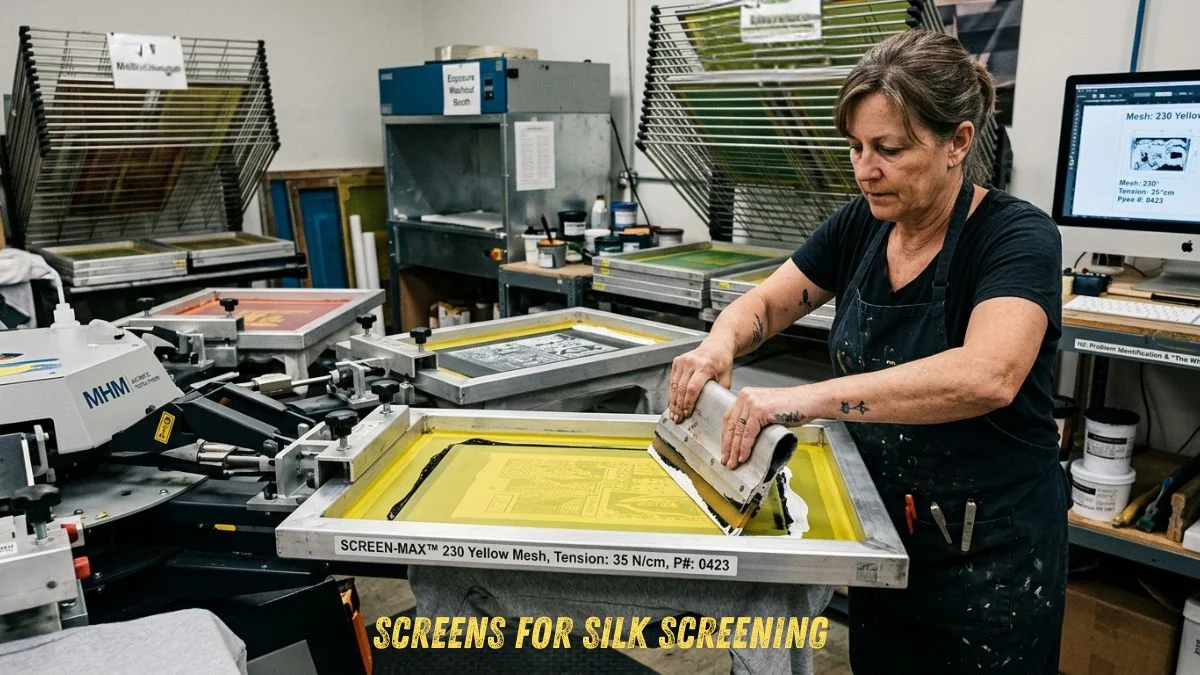
Screens for silk screening define the final print quality of any design project. Choosing the right mesh count ensures sharp details and consistent ink flow for professionals. Furthermore, modern screen technology integrates high-tension frames to prevent image distortion during long runs. Therefore, understanding these technical foundations is essential for achieving commercial-grade results in printing.
Why Tension and Mesh Count Fail in Standard Screen Printing
Many printers struggle with blurry edges because they choose the wrong mesh for their specific ink. Consequently, low-tension screens cause ghosting effects that ruin the registration of multi-color designs on textiles. Therefore, you must identify the relationship between fabric density and pigment viscosity before starting any job. However, even experienced professionals often overlook the impact of environmental humidity on screen emulsion stability.
Poor screen selection leads to excessive ink consumption and increased production costs over time. Moreover, inconsistent mesh opening sizes result in uneven deposits which compromise the tactile feel of the garment. So, printers face significant downtime when screens lose their snap-back capability during high-speed automated press cycles. Because of this, selecting durable aluminum frames becomes a critical decision for maintaining long-term operational efficiency.
Substrate compatibility remains a major hurdle for those transitioning from flat graphics to textured surfaces. Additionally, the lack of standardized testing for screen longevity creates uncertainty in high-volume manufacturing environments. Thus, businesses often see a decline in repeat customers when print quality fluctuates due to degrading screen mesh. Nevertheless, implementing a rigorous screen inspection protocol can mitigate these common issues and ensure consistent output.
Furthermore, chemical interactions between aggressive solvents and mesh adhesives can cause premature screen failure. Hence, the industry is shifting toward laser-welded mesh to eliminate the risks associated with traditional glue-based frames. Also, the inability to clear thin ink lines often stems from static electricity buildup on synthetic fibers. Consequently, grounding your equipment and using anti-static mesh treatments are now standard practices in elite print shops.
Technical Architecture of High-Modulus Screen Mesh Systems
Modern screens for silk screening utilize high-modulus polyester fibers to achieve superior dimensional stability. According to ISO standards, these fibers must maintain specific tensile strength to resist stretching under heavy squeegee pressure. Therefore, manufacturers focus on weave precision to ensure every mesh opening is identical across the entire frame. Consequently, this engineering approach allows for predictable ink deposit thickness, which is vital for technical industrial printing.
Advanced screens incorporate thin-thread technology to increase the percentage of open area within the weave. Moreover, this design reduces the force required to push ink through the mesh onto the target substrate. So, printers can achieve higher resolution images without the risk of ‘moiré’ patterns interfering with the visual. However, the thread diameter must be balanced against the overall durability required for thousands of repeated print strokes.
IEEE-grade manufacturing environments utilize computerized tension meters to calibrate every screen for silk screening before shipment. Additionally, the integration of plasma-treated surfaces enhances the adhesion of light-sensitive emulsions to the polyester threads. Thus, the screen acts as a precision optical tool rather than a simple mechanical filter for liquid pigments. Therefore, the architecture of the mesh determines the limit of detail achievable in complex halftone photographic reproductions.
Furthermore, the geometry of the weave—plain vs. twill—impacts how ink shears off the mesh fibers. Hence, choosing a plain weave provides better stability for fine lines and small text in professional applications. Also, the use of yellow-dyed mesh helps to prevent light scattering during the exposure process for sharper stencils. Consequently, these technical refinements elevate the standard of screens for silk screening in today’s competitive global marketplace.
Analyzing Key Features and Measurable Benefits for Professional Screens
| Feature | Technical Function | Business Benefit |
| High Mesh Count | 110 to 305 threads per inch | Sharp detail and low ink usage |
| Aluminum Frames | Rigid support structure | Long-term durability and no warping |
| Yellow Mesh Dye | Light refraction reduction | Prevents stencil undercut and blurring |
| Thin Thread Diameter | Increases open area percentage | Better ink flow and softer feel |
Choosing high-quality screens for silk screening directly improves the throughput of your entire production facility. Furthermore, the benefit of reduced ink waste translates to higher profit margins on every single printed unit. Therefore, investing in premium hardware lowers the total cost of ownership over the life of the screen. Consequently, your team spends less time troubleshooting and more time fulfilling orders for high-value clients worldwide.
The feature of high-tension stability means that registration remains perfect from the first shirt to the last. Moreover, this consistency is crucial when printing complex 8-color designs that require exact alignment on every pass. So, using screens for silk screening with low elongation properties prevents the ‘smeared’ look of cheap alternatives. However, users must ensure they have the proper equipment to maintain these high tension levels over time.
The Industry Secret: Hidden Variables in Mesh Manufacturing
Competitors often hide the fact that mesh count alone does not guarantee a high-quality print result. In fact, the surface tension of the fiber plays a larger role in ink release than most marketing suggests. Therefore, top-tier shops now demand ‘calendered’ mesh which has been flattened to control the ink volume precisely. Consequently, this allows for printing on non-traditional surfaces like glass or metal with extreme clarity and durability.
Many suppliers provide screens that lose 20% of their tension within the first hour of active use. However, elite screens for silk screening undergo a pre-stretching process to eliminate this initial ‘settling’ period entirely. So, you can achieve professional results immediately without waiting for the fabric to stabilize on the frame. Moreover, the industry is quietly moving toward hybrid steel-polyester weaves for applications requiring sub-micron accuracy in electronics.
Furthermore, the chemical resistance of the mesh adhesive is often the weakest link in the entire screen system. Hence, many shops experience frame failure when using high-strength reclaiming chemicals needed for UV-curable ink systems. Also, the microscopic roughness of the fiber surface dictates how well the emulsion clings during the washing process. Consequently, choosing a chemically etched mesh can prevent stencil breakdown during long production runs in harsh environments.
Step-by-Step Guide to Professional Screen Preparation and Maintenance
First, degrease your screens for silk screening to remove any residual oils from the manufacturing process. Furthermore, apply a high-quality emulsion using a scoop coater for a smooth and even light-sensitive layer. Therefore, ensure the screen dries in a completely dark and dust-free environment to avoid pinholes in your stencil. Consequently, this preparation phase is the foundation for every successful print job you will ever perform.
Next, align your positive film carefully using a registration grid to ensure the image is perfectly centered. Moreover, use a vacuum-seal exposure unit to pull the film tight against the glass and the mesh. So, the lack of space between the film and screen prevents light from creeping under the black lines. However, you must calibrate your exposure time based on the specific mesh count and emulsion type you use.
NOTE: Improper handling of chemical reclaimers can cause skin irritation and environmental damage. Always wear protective gear and use a filtration system to capture solids before disposing of waste water.
The Victory Verdict: Mastering Mesh for Production Excellence
In conclusion, the quality of your screens for silk screening determines the ceiling of your artistic and technical potential. Therefore, prioritizing mesh tension and fiber quality will lead to consistent growth for your printing business operations. Consequently, the transition to high-modulus frames represents a ‘Victory Verdict’ for anyone seeking to lead the market. Finally, always keep exploring new weave technologies to stay ahead of the evolving demands of modern textile design.
Strategic FAQs for Screen Printing Professionals
Q: What mesh count is best for white ink?
A: Use a 110 to 156 mesh count to allow thick white pigments to pass through easily.
Q: How long do aluminum screens last?
A: With proper care, a high-quality aluminum frame can last for several years of daily use.
Q: Why does my emulsion wash off?
A: This usually happens due to under-exposure or failing to degrease the screen properly before coating.
Q: Can I reuse screens for silk screening?
A: Yes, you can reclaim screens by removing the old stencil with specialized emulsion remover chemicals.
Q: What is the benefit of yellow mesh?
A: Yellow mesh prevents light refraction, resulting in much sharper detail for fine line and halftone prints.