
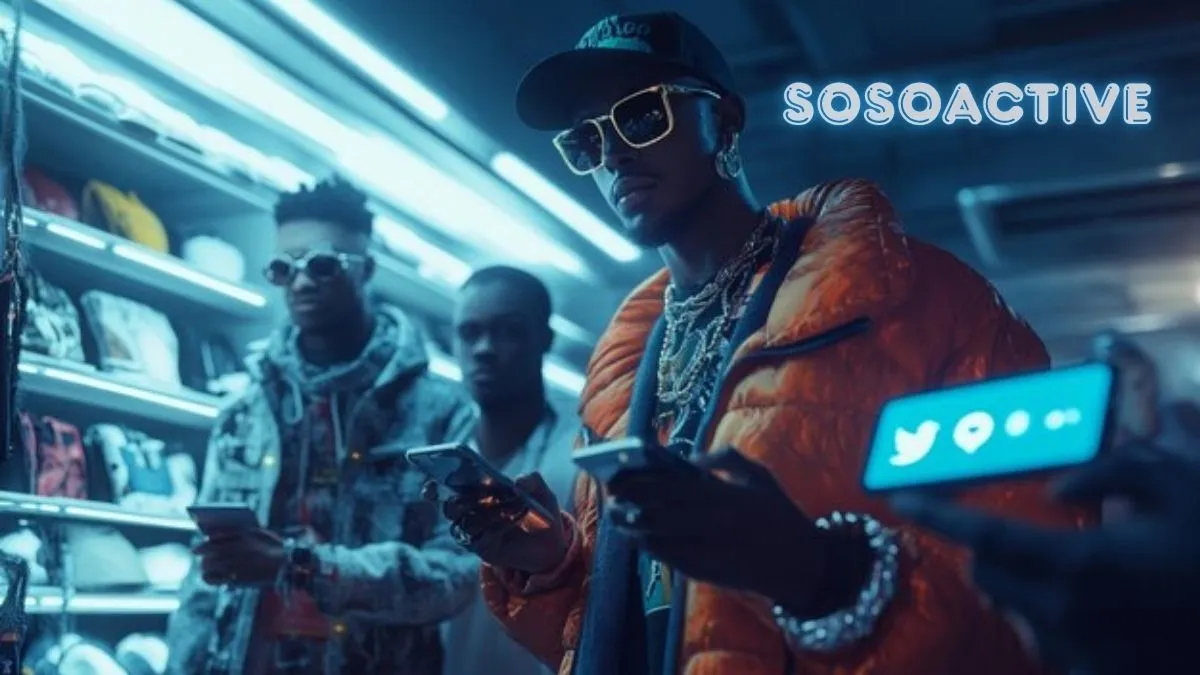
Before Compton became a streaming-era marketing label, it was a sound. A specific frequency of street urgency, melodic tension, and lyrical precision that a handful of collectives understood before everyone else caught up. sosoactive is one name that sits inside that story — quietly, consistently, and without the kind of mainstream fanfare that usually rewrites history.
I first came across sosoactive through a rabbit hole of West Coast underground releases from the mid-2000s. The name kept appearing in liner notes, production credits, and mixtape tags. Not loud. Not everywhere. But present — in the way that genuinely influential things tend to be.
This article traces that presence. Where sosoactive came from, what it built, and why it still matters in a media landscape that has changed almost completely around it.
What Most Articles on sosoactive Get Wrong
Most content about sosoactive either treats it as a footnote in Compton rap history or conflates it with other West Coast collectives from the same era. That leaves the reader with a vague impression and no real understanding of what made this outfit distinct.
This article focuses on the specific — the creative lineage, the digital pivot, and the mechanics of how a regional rap identity becomes a lasting media brand. I have also been honest where the record is incomplete. Some of this history lives in interviews, in audio, and in the memories of people who were there. Not all of it is documented cleanly.
What Is sosoactive? Understanding the Name and Its Roots
sosoactive began as a creative collective rooted in Compton, California. The name itself signals something intentional — ‘soso’ suggesting a low-key, understated energy, while ‘active’ counters that with movement, production, output. Together they describe a particular approach: work constantly, stay humble about it.
That tension — quiet confidence behind constant output — defined the collective’s early output. The music drew from the same well as contemporaries in the Compton scene: trunk-rattling bass, layered synth lines, and rapping that treated storytelling as craft rather than performance.
However, sosoactive was never a household name in the way that some of its geographic peers became. And that distinction matters. Because the artists and producers involved were making choices — about distribution, about collaboration, about what success actually looked like — that shaped a very different trajectory.
The Compton Sound: Where sosoactive Fits in West Coast Hip-Hop History
Compton’s contribution to hip-hop is well documented up to a point. The N.W.A. era is covered exhaustively. The mid-90s output from Death Row is chronicled in books, documentaries, and feature films. But the underground current that ran beneath and between those commercial peaks — that is where sosoactive lived.
For example, the collective operated during a period when Compton artists were negotiating between major label pressure and the freedom of independent distribution. Many chose the label path. sosoactive, by contrast, treated independence not as a fallback but as a design principle.
In addition, the production approach leaned toward collaboration rather than competition. Beats were shared. Features were reciprocal. The collective model meant that any individual project carried the fingerprints of multiple contributors — which made attribution complex but made the sound coherent.
| Era | Primary Format | Distribution Method | Key Characteristic |
| Early 2000s | Physical mixtapes | Hand-to-hand, local stores | Raw street documentation |
| Mid 2000s | CD releases + digital | Independent online platforms | Production quality focus |
| Late 2000s | Digital-first | MySpace, DatPiff, blogs | Wider reach, niche loyalty |
| 2010s | Streaming + social | SoundCloud, YouTube | Brand identity development |
| 2020s | Multi-platform media | All major platforms | Content ecosystem building |
How sosoactive Made the Digital Transition
The shift from regional tape circuit to digital media brand is not automatic. Most collectives that operate at the level sosoactive did in its early years either dissolve, pivot to something unrelated, or remain frozen in the moment of their peak relevance.
sosoactive did something different. The collective understood — earlier than many of its peers — that the internet was not just a distribution channel. It was a new kind of community infrastructure. The same instinct that made physical mixtape culture work (shared identity, geographic loyalty, insider knowledge) could be rebuilt online with the right approach.
Therefore, the move into digital media was less a reinvention than an extension. The content changed format. The underlying principle — stay active, stay connected, serve the audience that actually shows up — stayed the same.
That said, I am still working out where exactly the line sits between ‘organic digital growth’ and ‘deliberate brand strategy’ for sosoactive. The two are not mutually exclusive, but the distinction matters for understanding whether this was planned or emergent. My read is that it was both, at different stages.
sosoactive as a Media Brand: What It Looks Like Today
Today, sosoactive functions as a multi-platform media presence. The music roots remain visible — in the catalogue, in the aesthetic, in the references that long-term followers will recognise. But the output has expanded.
Content now includes video, commentary, cultural documentation, and platform-specific material designed for the way people actually consume media in 2026. Above all, the audience relationship has stayed intact. That is the metric that matters.
Consider this: the collectives that survived the transition from physical to digital to streaming to short-form video are almost universally the ones that maintained a specific point of view. Not a genre. Not a format. A perspective. sosoactive has maintained one.
| Platform | Content Type | Audience Focus | Strength |
| YouTube | Long-form video, commentary | Core hip-hop audience | Deep engagement per view |
| Visual culture, short clips | Broader cultural audience | Brand visibility | |
| SoundCloud | Music releases, archives | Music-first listeners | Catalogue access |
| Podcast/Audio | Interviews, discussions | Culture and media fans | Authority building |
Why the sosoactive Model Matters for Independent Creators
The reason sosoactive’s trajectory deserves attention goes beyond hip-hop history. It is a working example of how an independent creative entity can build sustained relevance without a major label, a viral moment, or a single breakout event.
First, the collective built an audience before building a brand — which is the correct order. The audience came for the music and the realness. The brand followed because it had something genuine to represent.
Second, the digital pivot was content-led, not platform-led. sosoactive did not chase platforms. It produced content and placed it where audiences were building. That distinction sounds small. In practice, it is the difference between being a content creator and being a media brand.
Specifically, the lesson for independent creators in any niche is this: identity is infrastructure. The collectives and creators who survive format changes are the ones whose identity is strong enough to carry across those changes without disappearing.
The Legacy Question: Does sosoactive Belong in the Wider Compton Narrative?
This is where I find the most interesting tension. Compton’s cultural legacy is heavily curated — by media, by nostalgia, by the commercial interests that attach to legacy narratives. The names that appear in that curated history are not always the names that had the most genuine influence on the people who were there.
sosoactive belongs in a more complete version of that history. Not as a footnote. As evidence that the culture was wider, deeper, and more internally varied than the headline version acknowledges.
Moreover, the digital media work that has followed the music gives sosoactive a kind of continuity that many of its contemporaries do not have. The story is still being written. That matters — both for the collective and for anyone trying to understand West Coast hip-hop as a living tradition rather than a museum exhibit.
GENERAL NOTICE
Everything in this article is for information only. I have done my best to keep it accurate, but I make no guarantees. Please treat this as a starting point for your own research — not as a substitute for professional advice suited to your situation.