
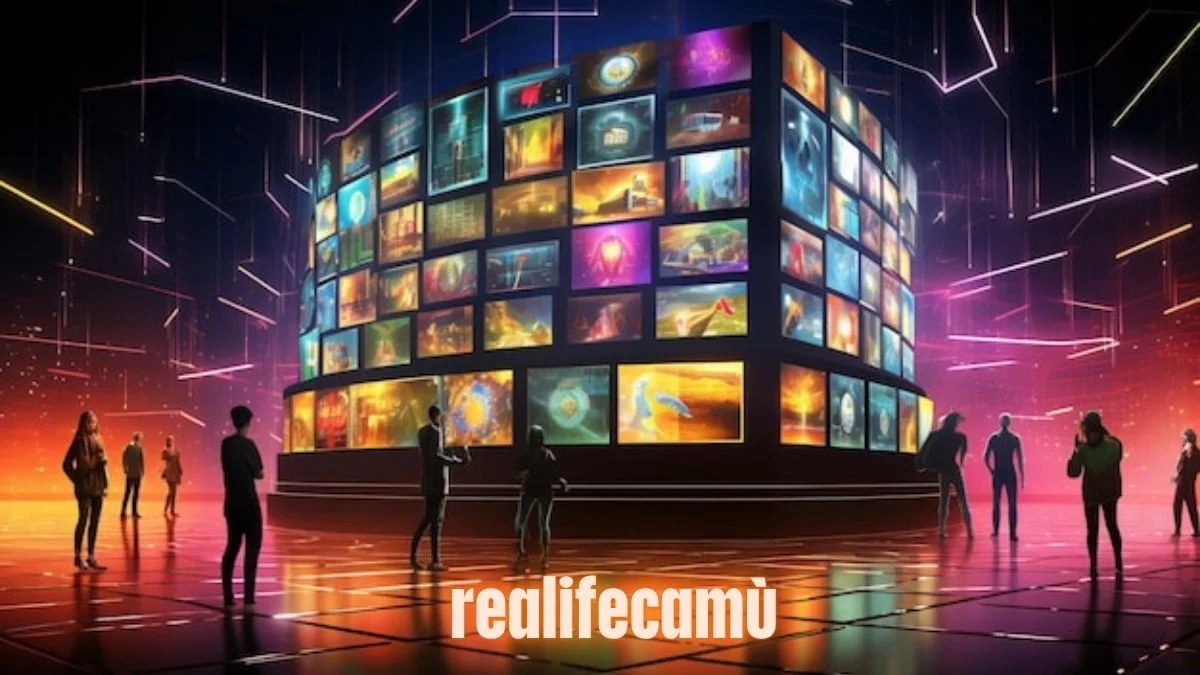
In a media landscape crowded with scripted dramas and manufactured reality shows, realifecamù has carved out a provocative niche — one built entirely on the unfiltered rhythms of real human life. As audiences increasingly crave authenticity over artifice, it could be that this genre represents a genuine evolution in how entertainment is conceived, delivered, and consumed.
This article examines realifecamù through the lens of media theory, audience psychology, and digital culture — exploring what it offers, how it compares to traditional media, and why researchers and cultural commentators are paying closer attention than ever.
1. The Origins and Concept Behind Realifecamù
Where Did It Come From?
Realifecamù traces its conceptual roots to the early 2000s wave of voyeuristic web content, when the emergence of broadband internet made continuous live streaming practically feasible for the first time. Inspired in part by social experiments in observational television, the platform evolved into a model where willing participants live their daily lives in shared, camera-equipped spaces — and viewers can tune in at any moment.
Unlike Big Brother or The Truman Show (which were scripted around surveillance as dramatic device), realifecamù positions itself as genuine documentary-style living. The appeal, research indicates, lies in what psychologists call “para-social intimacy” — the feeling that one is witnessing something truly private and unperformed.
The Name and Its Cultural Nuance
The term “realifecamù” itself blends “real life” with “cam” (camera) and the accent mark likely serving as a stylistic differentiator or regional linguistic flourish. From a branding perspective, it signals a commitment to rawness — an aesthetic counter-positioning against the polished production values of Hollywood or streaming giants.
Community members and long-time viewers often describe their first encounter with realifecamù as “disorienting in the best way” — accustomed as they were to cuts, music cues, and narrative arcs that tell them what to feel and when to feel it.
2. Realifecamù vs. Traditional Media: A Direct Comparison
The following table outlines key differentiators between the realifecamù model and conventional media production and distribution:
| Feature | Realifecamù | Traditional Media |
| Content Type | Unscripted, live, real-time | Scripted, pre-produced |
| Audience Role | Active observer / participant | Passive consumer |
| Production Cost | Relatively low overhead | High budget, large crews |
| Authenticity | High — real people, real moments | Variable — often manufactured |
| Interactivity | Community-driven engagement | Limited viewer interaction |
| Accessibility | On-demand, digital-first | Broadcast schedules, gatekeeping |
| Ethical Oversight | Evolving, community-led | Regulated by media standards |
As the table suggests, realifecamù likely occupies a distinct media category — not simply “reality TV on the internet,” but a separate genre with its own emerging grammar, ethics, and audience contract.
3. The Realifecamù Viewer’s 7-Step Engagement Framework
To understand how audiences typically interact with realifecamù, media researchers and community analysts have identified a likely progression — what we can term the Realifecamù 7-Step Engagement Model. This framework is conceptual and descriptive, not prescriptive:
| Step | Phase | What It Involves |
| 1 | Discovery | Finding and accessing the realifecamù platform and understanding its core model. |
| 2 | Observation | Passively watching streams and learning community etiquette and cultural norms. |
| 3 | Contextualization | Understanding the background and personas of the people you follow. |
| 4 | Community Entry | Joining forums, comment sections, or social groups discussing realifecamù content. |
| 5 | Critical Analysis | Evaluating what you watch through ethical and media-literacy frameworks. |
| 6 | Responsible Engagement | Participating in a way that respects the dignity of those being observed. |
| 7 | Advocacy & Reflection | Contributing to conversations about the genre’s ethics and future direction. |
This framework suggests that the most fulfilling engagement with realifecamù content tends to evolve from passive viewership into active, ethically conscious participation — mirroring patterns seen in other participatory media communities.
4. The Authenticity Question: Is Unscripted Always More “Real”?
The Constructed Nature of All Media
One of the most important critical lenses to apply to realifecamù — and to unscripted content broadly — is the concept of “construction.” Even in the absence of scripts, the selection of camera placement, the choice of participants, and the framing of what is captured all involve editorial decisions. From a media studies perspective, no media product is truly unmediated.
That said, realifecamù arguably reduces several layers of artificial construction that traditional media relies upon. There are no writers’ rooms, no reshoots, no color-graded emotional cues. What viewers see is, at minimum, what the camera sees in real time — and that distinction carries real weight for audiences who have grown disillusioned with manufactured drama.
Audience Trust and Parasocial Bonds
Research in media psychology indicates that parasocial relationships — the one-sided emotional bonds viewers form with media figures — are significantly stronger when audiences perceive the subject as authentic. Realifecamù appears to accelerate this dynamic: viewers often report feeling “connected” to the people they observe in ways they do not with actors or even traditional reality TV contestants.
This could be understood as both a strength and a vulnerability of the format. The intimacy is real; so too are the ethical responsibilities that come with it.
5. Community, Collaboration, and How to Get Involved
The Realifecamù Community Ecosystem
One of realifecamù’s most distinctive features is the community that has formed around it. Dedicated forums, subreddits, Discord servers, and social media groups bring together viewers from across the globe to discuss what they’ve seen, debate ethical questions, and share emotional reactions. This meta-layer of discourse is arguably as rich and dynamic as the content itself.
Community members often develop shorthand, in-jokes, and collective memory around recurring moments or personalities — creating a shared cultural archive that gives the genre longitudinal depth it would otherwise lack.
How People Engage and Contribute
For those exploring realifecamù for the first time, the entry points are multiple:
- Viewing: Access the platform directly and watch streams at your own pace.
- Discussion: Join community forums where viewers contextualize and analyze content.
- Content Curation: Many community members archive notable moments or compile highlights for others.
- Ethical Advocacy: Some viewers actively participate in conversations about platform policies, privacy standards, and participant welfare.
The community ethos, at its best, reflects a kind of collective curatorial intelligence — where the crowd watches, filters, discusses, and ultimately shapes which moments matter and what they mean.
6. The Ethical Landscape: Privacy, Consent, and Responsibility
Any serious analysis of realifecamù must engage with its ethical dimensions. The central tension is this: participants consent to observation, but the full scope of what “consent” means in the context of continuous, public streaming remains a matter of genuine debate among legal scholars, ethicists, and digital rights advocates.
Key Ethical Considerations
- Informed Consent: Are participants fully aware of how their images may be used, shared, or archived?
- Right to Withdraw: What mechanisms exist for participants to opt out at any time, without penalty?
- Viewer Responsibility: The ethics of observation are not solely the platform’s burden — viewers, too, carry responsibility for how they engage.
- Data and Privacy: All continuous streaming produces data. Who owns it, and who benefits from it, are legitimate questions platforms must answer.
From a regulatory perspective, realifecamù operates in an evolving legal gray zone in many jurisdictions. It is likely that increased regulatory scrutiny will come as the genre grows — a development that thoughtful community members generally welcome as a sign of maturation rather than threat.
7. Is Unscripted, Real-Time Content the Future of Entertainment?
The case for realifecamù and its genre siblings as a dominant future entertainment format rests on several converging trends:
- Authenticity fatigue: Mainstream audiences are increasingly resistant to content that feels manipulated or insincere.
- Digital-native consumption habits: Younger audiences are accustomed to TikTok, live-streaming, and vlogging — formats that normalize unpolished, real-time content.
- Low production barriers: As production costs drop, the competitive advantage of traditional media’s high-budget production value diminishes.
- Community-driven discovery: Algorithmic and peer-to-peer recommendation systems favor engagement over prestige, which could benefit authentic-feeling content.
However, it would be reductive to suggest traditional media is simply dying. Scripted storytelling, cinematic production, and authored narratives likely retain irreplaceable cultural value. A more nuanced reading suggests the future of entertainment is likely pluralistic — with realifecamù-style formats occupying a growing but distinct segment of a diversified media ecosystem.
Industry Signals Worth Watching
- Streaming platforms are increasingly investing in “live” and “documentary-style” content.
- Advertising models are adapting to reward authentic engagement over passive viewership.
- Academic media studies programs are beginning to include persistent livestream culture in curricula.
8. Summary Checklist: Key Takeaways
Use this quick-reference checklist to consolidate your understanding:
- Realifecamù is a real-time, unscripted content model with a distinct audience contract from traditional media.
- Its appeal likely stems from authenticity, parasocial intimacy, and community-driven engagement.
- The Realifecamù 7-Step Engagement Framework maps viewer evolution from passive observation to ethical advocacy.
- The genre raises important questions about consent, privacy, and viewer responsibility that remain actively debated.
- Community ecosystems surrounding realifecamù create meta-layers of meaning and shared cultural memory.
- The future of entertainment is likely pluralistic — unscripted formats will grow, but not necessarily replace authored media.
- Critical media literacy is essential for anyone engaging with this genre.