
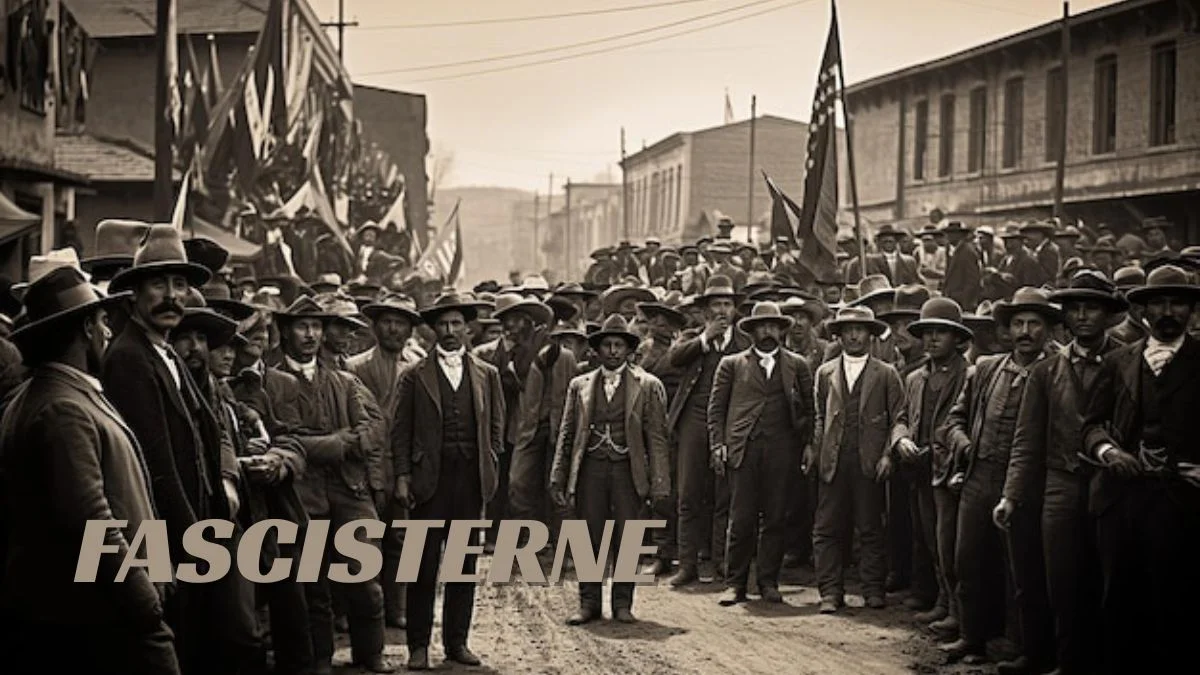
The term fascisterne—Danish for ‘the fascists’—refers to the political movements and ideologies that dominated significant portions of Europe between the First and Second World Wars. These movements were characterized by extreme nationalism, authoritarianism, and a rejection of democratic principles.
Understanding fascisterne is crucial for comprehending modern political discourse and preventing the resurgence of authoritarian ideologies. From Mussolini’s Italy to Hitler’s Germany, these movements left an indelible mark on world history—one that continues to influence contemporary society in ways both overt and subtle.
The Origins of Fascisterne: Post-War Europe in Crisis
The emergence of fascisterne cannot be separated from the profound upheaval that followed World War I. Europe in the aftermath of the Great War was a continent experiencing unprecedented crisis on multiple fronts.
Economic Turmoil and Social Unrest
The post-1918 period was marked by devastating economic conditions. Millions faced unemployment, poverty, and uncertainty as empires collapsed and economies struggled to stabilize. This environment of fear and disillusionment created fertile ground for radical political ideologies.
Research indicates that fascist movements often capitalized on economic anxieties by redirecting blame away from systemic market forces toward convenient scapegoats. Jews, immigrants, leftists, and other marginalized groups became targets of this political strategy.
Italy: The First Fascist State
The first successful fascist movement emerged in Italy under Benito Mussolini. In 1919, Mussolini founded the Partito Nazionale Fascista (National Fascist Party), presenting himself as capable of restoring Italy’s greatness and imposing order on a fractured society.
By 1922, after the famous March on Rome—where 30,000 armed supporters marched through the streets—Mussolini seized power as Prime Minister. He established a dictatorship as il Duce (‘the leader’), operating without accountability to parliament.
Core Ideology: The Fascisterne 7-Step Framework
To understand fascisterne, experts have identified seven fundamental characteristics that define fascist ideology. This framework helps distinguish genuine fascism from other authoritarian movements.
- Extreme Militant Nationalism — Fascisterne prioritized the nation above all else, often promoting racial or ethnic superiority.
- Rejection of Democracy — Liberal democratic practices were viewed as interfering with the expression of the national will.
- Authoritarian Leadership — One-party states led by a single leader who claimed to embody the national spirit.
- Violent Suppression — Violence was accepted—even celebrated—if it served the national community.
- Anti-Communism — Intense hatred of communism and socialism, despite sharing some authoritarian tactics.
- Militarism — A strong, vigilant military was considered necessary to defend group interests.
- Scapegoating — Blame was systematically shifted toward minority groups to unify the majority population.
Key Figures: The Leaders Behind Fascisterne
Benito Mussolini: Il Duce of Italy
Benito Mussolini is widely recognized as the architect of modern fascism. His movement promised everything from extreme radicalism in 1919 to extreme conservatism by 1922, but in reality centered on naked personal power achieved and maintained through violence.
Mussolini attracted followers ranging from gangsters to sincere patriots, organizing them into ‘Blackshirt Militia’ armed squads. Funding came from alarmed industrialists and wealthy elites who saw fascism as a tool to suppress the radical revolution they feared.
Adolf Hitler: The Führer of Nazi Germany
Germany embraced fascism more comprehensively than any other nation. The Nazi government that ruled under Adolf Hitler between 1933 and 1945 represented the most extreme manifestation of fascist ideology.
Hitler’s rise was facilitated by the devastation of the post-World War I Weimar Republic. Inflation, soaring unemployment, and political paralysis during the Great Depression created conditions that allowed Nazism to prosper. The Nazi Party promised stability and a return to prewar German pride.
Fascisterne in Denmark: A Smaller Movement
In Denmark, the term fascisterne specifically refers to the Danish fascist organization founded in January 1931. Though short-lived and never politically dominant, it offers insight into how global ideological currents took root even in traditionally democratic societies.
The movement attracted disaffected veterans, young nationalists, and middle-class citizens concerned about unemployment and labor unrest. They adopted black uniforms, Roman salutes, and published a newspaper called Fascisten. However, Denmark’s strong democratic institutions and social welfare programs limited their appeal.
Fascisterne and World War II: Devastating Consequences
The expansionist ambitions of fascist regimes directly led to World War II—the deadliest conflict in human history. Driven by beliefs in their own superiority and territorial entitlement, fascist leaders pursued aggressive foreign policies that destabilized entire regions.
The Holocaust and Genocide
Among the most horrific aspects of fascisterne was the Holocaust—a systematic campaign of genocide carried out by the Nazi regime. Targeting Jews, along with Roma people, political opponents, disabled individuals, and other marginalized communities, this represents the darkest consequence of unchecked fascist ideology.
The conflict resulted in unprecedented destruction, with entire cities reduced to rubble and tens of millions of lives lost. Historical estimates suggest the war claimed between 70-85 million lives globally.
Resistance Against Fascisterne
It is crucial to acknowledge the resistance movements that arose across Europe. Individuals and groups risked their lives to oppose authoritarian rule, providing a powerful counterpoint to fascist dominance. Underground movements gained strength, particularly in Nazi-controlled territories.
In Italy, strikes by industrial workers in northern regions led the rebellion against Mussolini’s regime. The final collapse of Italian fascism resulted from Allied military victories combined with open popular rebellion.
The Modern Legacy: Fascisterne in Contemporary Society
The defeat of fascist powers in 1945 marked a turning point in world history. However, the legacy of fascisterne continues to influence modern political discourse in various ways.
Warning Signs in Modern Politics
Scholars continue to identify patterns in modern politics that echo aspects of fascist ideology. These may include attacks on democratic institutions, concentration of power in single leaders, and the use of propaganda to manipulate public opinion.
Some contemporary movements draw inspiration from the principles of authoritarianism and nationalism that defined early fascist regimes. However, it is crucial to distinguish between historical fascism and modern right-wing populism—many current movements operate within democratic frameworks.
Digital Age Challenges
Social media platforms have amplified extremist views in ways the original fascisterne could never have imagined. In the past, fascist movements needed newspapers and rallies to spread their message. Today, a single individual can reach millions online through short, emotional, and often misleading messages.
The online environment creates echo chambers where radical thoughts can thrive unchecked, making civic vigilance and media literacy more important than ever.
Lessons Learned: How Democracies Resist Fascisterne
The failure of fascisterne in certain countries—and their success in others—offers valuable lessons for understanding how democracies can resist authoritarian movements.
- Strong Institutions Matter — Parliamentary systems, independent judiciaries, and free press provide critical checks against extremist takeovers.
- Economic Security Reduces Extremism — Social welfare policies can undercut the appeal of radical alternatives during economic crises.
- Education and Historical Memory — Teaching students about this dark chapter helps prevent repetition of totalitarian regimes.
- Active Citizenship — People must vote, speak up, and support truth and fairness to maintain democratic systems.
- Inclusive Political Discourse — Addressing legitimate concerns without resorting to scapegoating reduces extremist appeal.
Fascisterne vs. Other Ideologies: Key Distinctions
Understanding how fascisterne differs from other political ideologies helps clarify its unique characteristics:
| Ideology | Primary Focus | Economic System | View on Individual |
| Fascisterne | National unity, racial/ethnic superiority | Capitalism with state control | Subservient to the state |
| Liberalism | Individual freedoms and rights | Free market capitalism | Paramount importance |
| Communism | Classless society, worker equality | State-controlled economy | Serves the collective |
| Socialism | Wealth redistribution, social welfare | Mixed economy with regulation | Balanced with collective needs |
Quick Reference: Identifying Fascisterne Characteristics
Use this checklist to recognize potential fascist tendencies in political movements:
- Cult of personality around a single leader claiming to embody national will
- Systematic attacks on democratic institutions and free press
- Promotion of national or racial superiority narratives
- Scapegoating of minority groups for societal problems
- Celebration or normalization of political violence
- Intense militarism and aggressive foreign policy
- Rejection of pluralism and suppression of political opposition
Conclusion: Why Understanding Fascisterne Still Matters
The study of fascisterne is not merely an academic exercise confined to history books. It remains a vital tool for understanding present-day politics and anticipating future challenges to democratic governance.
By examining how fascist movements gained support, consolidated power, and ultimately led to widespread destruction, we can better recognize warning signs of similar developments. The term fascisterne continues to carry weight in political discussions precisely because the fundamental dynamics of authoritarianism—economic anxiety, scapegoating, and concentrated power—remain relevant. Staying informed, asking critical questions, and engaging in civic dialogue are essential strategies for ensuring that the dark chapters of fascisterne history are not repeated. As historian Ruth Ben-Ghiat notes, modern authoritarian leaders ‘use democratic systems to gain power, then weaken them from inside’—making vigilance and institutional protection more crucial than ever.